What future for your waste in Provence-Alpes-Côte-D'azur?
Waste treatment must respect the European hierarchy, which gives priority to material recovery followed by energy recovery.
Waste recovery aims to reduce the volume of final waste. Waste management follows a precise circuit:
collection > treatment > recovery > recycling > incineration/storage of final waste.
The treatment of professional or private waste (iron, metals, paper, cardboard, plastic...) begins after collection, transport and pre-treatment operations. The types of treatment vary, as they are adapted to a specific type of waste. They are carried out by private or public operators, as part of a public or private service.
To carry out these operations, it is necessary, like the SCLAVO ENVIRONNEMENT Group, to have facilities classified for environmental protection.
Efficient logistics
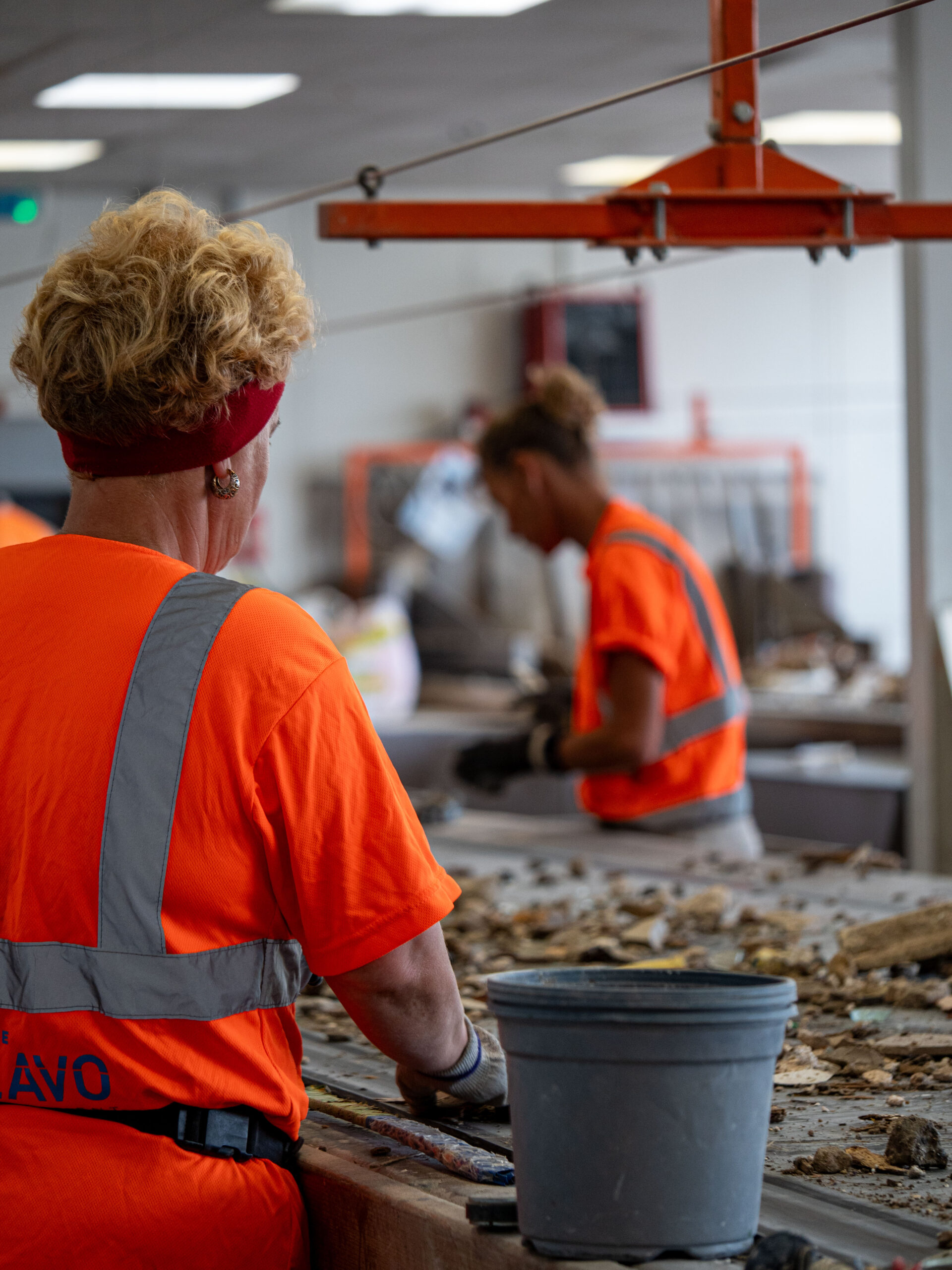
As specialists in global waste management, we have set up professional, recognized and certified local facilities to sort and recycle waste from construction and public works, industry, local authorities and private individuals.
Whether material or energy recovery, a recycling channel is set up for each waste item processed at the NDW Recycling Eco-Pole, with priority given to local channels.
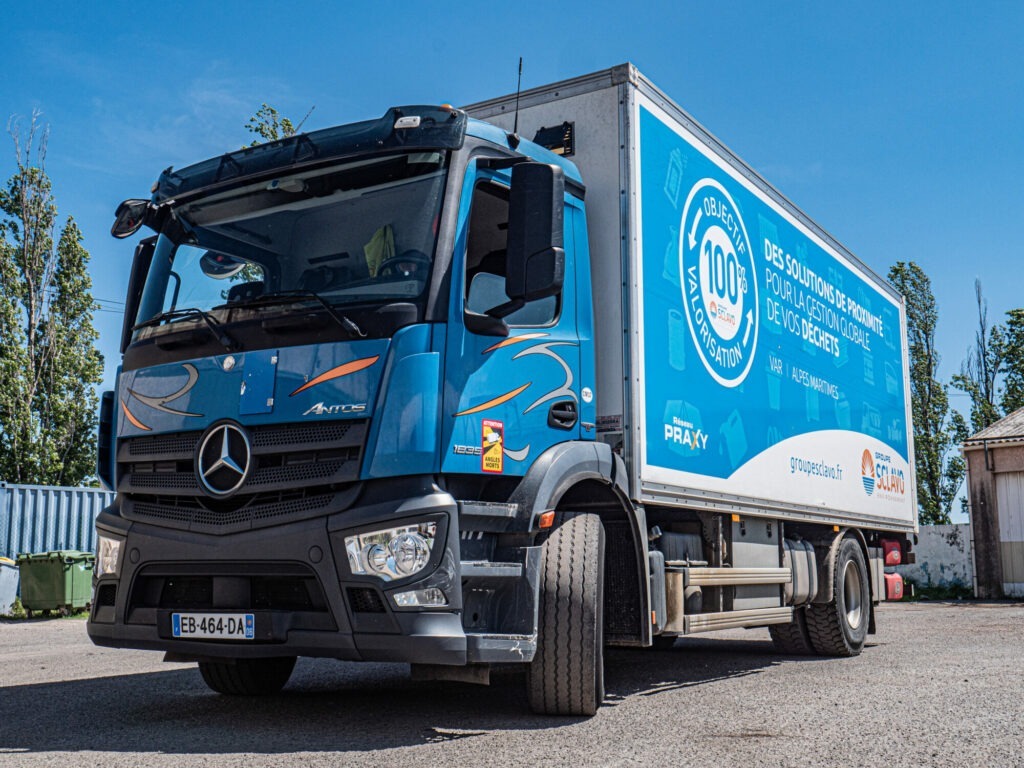
Waste from all the Eco-Relays in the Alpes-Maritimes and Var regions passes through the Eco-Poles, where it is sorted and packaged to optimize truck loads for recycling.
The NDW Recycling Eco-Pole is a structuring tool for construction and industrial waste on the Côte D'Azur, and was created to provide an immediate, concrete and coherent response to local waste management and material recovery issues.
Choosing your waste service provider
Sorting at source is an essential lever in the development of recycling. It is even mandatory for so-called 5-stream waste. Selective collection facilitates the massification of waste, and therefore its monetization. Waste sorted and reserved for recycling is a source of profit:
Discover our service Rental of skips & other containers
Waste recycling
Recovery is defined as any operation whose main result is that waste is used for useful purposes as a substitute for other substances, materials or products.
Recycling allows substances, materials or products to be substituted for other substances, materials or products.
Recycling waste materials
Material recovery includes reuse/regeneration and recycling.
Material recovery is the treatment of waste so that it can be reused. After processing, waste becomes the raw material for a new product.
Depending on its type, waste is sorted and compressed into cubes (paper, cardboard, plastic film, packaging) using a "baler", shredded (glass, plants, tires, rubble) or sheared/cut (irons, metals).
Reconditioned waste is used, for example, by paper mills, plastics manufacturers, glassworks, foundries, metal refineries ... Paper and cardboard become paper pulp again. Less well known, the mineral base of plaster is used in the composition of new products.
Regeneration is based on processes for refining a fluid or solid, involving the extraction of the pollutant or undesirable fraction contained in the waste.
Regeneration involves oils, solvents, fluorinated gases, plastics, catalysts,etc. It can be carried out by filtration, vacuum dehydration, refining, etc. ¨For example: crushed, regenerated plastics become PVC for insulating doors and windows.
Waste-to-energy
Energy recovery involves using the calorific value of waste by burning it and recovering this energy in the form of heat or electricity.
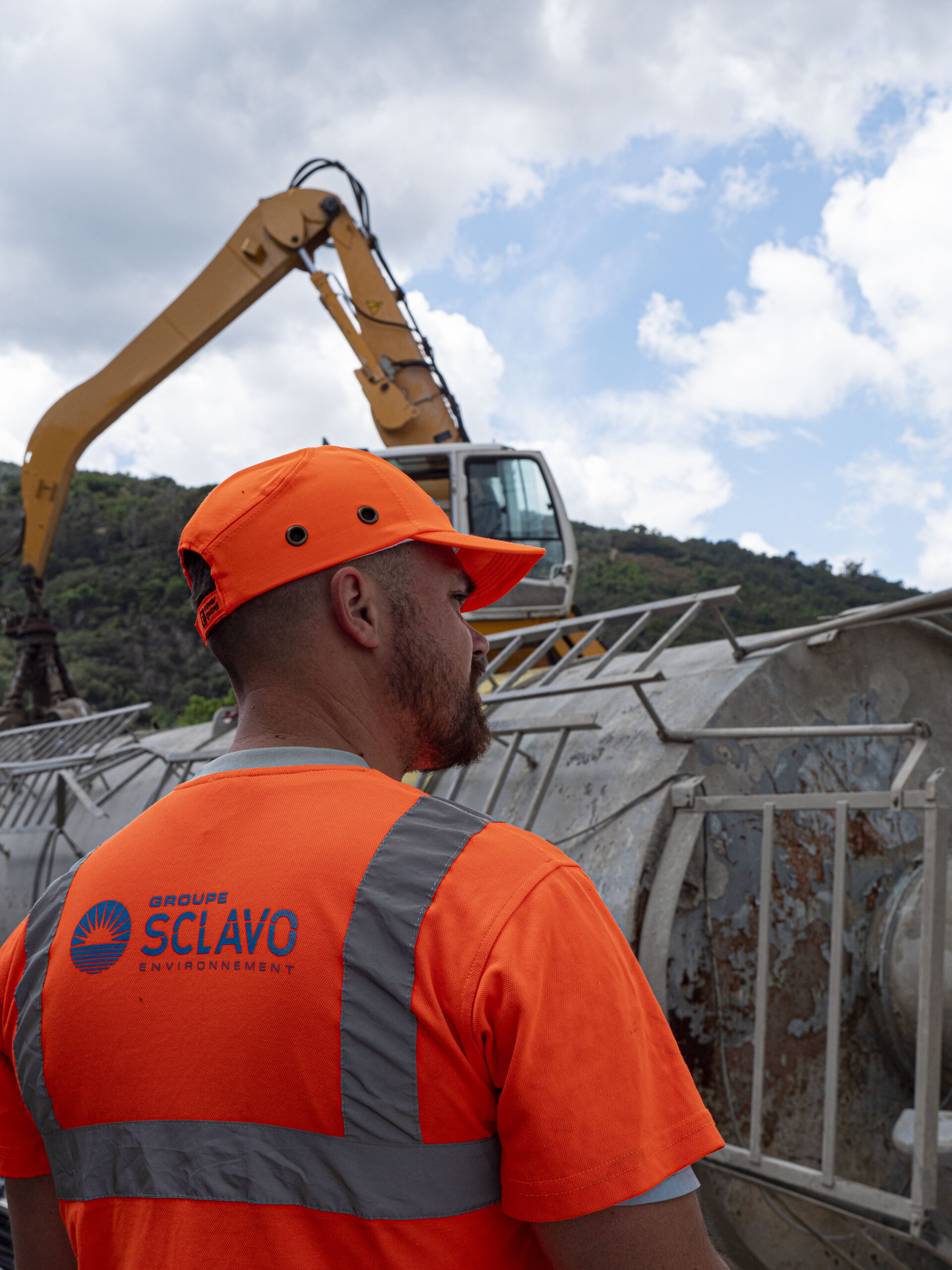
Non-hazardous waste not suitable for material recovery is compressed into cubes, also known as "CSR bales" (Combustible Solide de Récupération), and supplied to certain fossil fuel-consuming industries such as cement works. Wood, such as pallet wood and sawmill offcuts, is crushed and used as fuel for boilers.
Treatment excluding recovery
Once analyzed and sorted in our laboratories by SCLAVO ENVIRONNEMENT chemists, hazardous waste is sent to various treatment plants, depending on the type of waste (thermal treatment by incineration, physico-chemical treatment, storage).
- Ultimate waste (waste which, by its nature or size, cannot be recycled) is stored in specialized centers and buried in accordance with strict specifications to limit pollution.
- Disposal is not recovery, even if its secondary consequence is the recovery of substances, materials, products or energy (article L. 541-1-1 of the French Environment Code).
Industrial waste, local authorities, public works, private individuals: 100% recovery target
The circular economy, in the literal and coastal sense for the Alpes-Maritimes and the Var, means that the waste flows to be recycled circulate as close as possible to their source to irrigate the recovery channels.
The SCLAVO ENVIRONNEMENT Group is constantly developing ways of recovering 100% of waste through its Eco Pole recycling centers for non-hazardous waste, hazardous waste and iron and metal, as well as its Eco Relais and professional waste collection centers.
The circular economy goes hand in hand with material recovery, and even aims forupcyclingthat is, increasing the value of the material during processing.
Creating resources at the source of waste is the daily objective of the SCLAVO ENVIRONNEMENT teams.
The sale of metal by weight can be very profitable in a professional waste disposal center, which guarantees the traceability of the waste. The SCLAVO ENVIRONNEMENT Group facilitates the recovery of metals and iron in the Var and Alpes-Maritimes regions, thanks to its 5 purchasing outlets and approved collection centers located close to business areas.