Construction site waste: your regulatory obligations
Every year, the building sector generates almost 40 million tonnes of waste, 90% of which comes from renovation or demolition operations.
Current regulations, reinforced by the obligation to declare worksites in advance, now require waste to be sorted at source. Each waste product must be sorted on site, according to its nature, and then directed towards a suitable recovery or recycling channel.
Construction waste: the scale of the project... and the obligations
Legislation requires upstream collection and/or sorting of inert, hazardous and non-hazardous waste, governed by increasingly strict regulations. Even if waste producers are not obliged to sort waste on site, they are still legally responsible for its final disposal.
The regulatory framework has been strengthened: legal sanctions, tighter controls on storage methods, and compulsory recovery of certain types of waste, notably plastic packaging.
While sorting at source is not always compulsory, it does help to reduce disposal costs. Meeting regulatory targets calls for rigorous management of waste flows, particularly for hazardous waste, which requires specific labeling and packaging prior to collection.
ECO-SITE MANAGEMENT :
Ease of logistics and cost optimization
Construction site waste management requires a specific approach, based on a preliminary on-site diagnosis. The aim of this assessment is twofold: to meet regulatory obligations while optimizing treatment costs through waste recovery.
Savings of up to 40% possible
By implementing source separation and appropriate organization, you can significantly reduce your management costs.
Set up your Éco-Chantier and transform your constraints into performance levers.
Your Éco-Chantier advantages
Cost reduction & customized services
Eco-Chantier is Eco-nomic and Eco-responsible:
Tangible benefits:
- Optimized management of collection and sorting at source saves time
- Reduced transport and waste treatment costs: savings of up to 40%.
- Possible buy-back of recoverable waste
- Regulatory compliance: avoid penalties in the event of an inspection
- Guaranteed traceability (BSD, recovery certificates, etc.)
- A certifying process that can be used in your calls for tenders
Full support for your projects
The SCLAVO ENVIRONNEMENT Group supports you from A to Z, from initial diagnosis to post-construction administrative follow-up:
- A single point of contact for personalized support
- Comprehensive management of all waste flows
- Raising staff awareness of sorting and best practices
- Assistance in drafting the SOGED (Schéma d'Organisation de la Gestion des Déchets - waste management organization plan)
- Participation in site meetings
- Setting up sorting zones adapted to the site
- Supply of storage and sorting equipment
- Authorized collection of all types of waste
- Regular monitoring and reporting
- Administrative follow-up and full traceability
Eco-Chantier means choosing efficiency, compliance and responsibility.
Eco-Building & Eco-Responsibility
Promote your social and environmental commitment.
Adopting an Eco-Chantier approach means fully integrating the principles of corporate social responsibility (CSR):
- Your waste is handled by an ICPE-regulated company with ISO 14001 & ISO 9001 certification.
- Your Eco-Chantier becomes a positive communication tool for your customers, partners and institutions.
- You benefit from an assessment of the valorizations carried out, for transparent traceability and a measurable impact.
1
Understanding
your needs
2
Proposal
of an action plan
3
Implementation
of your customized solution
4
Organization
logistics
5
Raising awareness
of your teams
6
Traceability
of your waste
7
Grouping
waste
8
Sorting and
packaging
9
Recycling, treatment
and waste recovery
10
end-of-construction report
Construction site waste: recycling and recovery
Material recovery, at the heart of the SCLAVO ENVIRONNEMENT Group's strategy
The SCLAVO ENVIRONNEMENT Group places waste recovery at the heart of its priorities.
Its ambition for the coming years is to achieve 100% recovery of waste from construction, industry, local authorities and private individuals, in order to transform this waste into new resources.
Thanks to its Eco-Poles and Eco-Relays, and its local and specialized channels, the group is a benchmark local player in the Alpes-Maritimes and Var regions, capable of treating and recovering all types of waste, including the most hazardous for people and the environment.
Show more
Concrete examples of added value:
Inert waste (stones, earthworks, bricks, glass, etc.): representing 65% of construction site waste, it is sorted, recycled and reused as fill or road base.
Gypsum: after treatment and drying, it reverts to recyclable gypsum, which can be reused in new formulations.
Ferrous and non-ferrous metals: collected, shipped, smelted by metallurgists, then reintroduced into industry.
Packaging plastics: washed, crushed and regenerated on specialized sites, they are transformed into secondary raw materials (PE/PP liners, textile fibers, etc.).
Did you know?
The cost of disposing of construction site waste in France is estimated at between 1.2 and 2.4 billion euros a year!
These figures underline the importance of optimized management and the relevance of an approach based on the circular economy.
Concrete examples of waste recovery (inerts, gypsum, metals, plastics, etc.) demonstrate the feasibility and effectiveness of our ambition:
-> to 100% recovery through recycling.
Show less
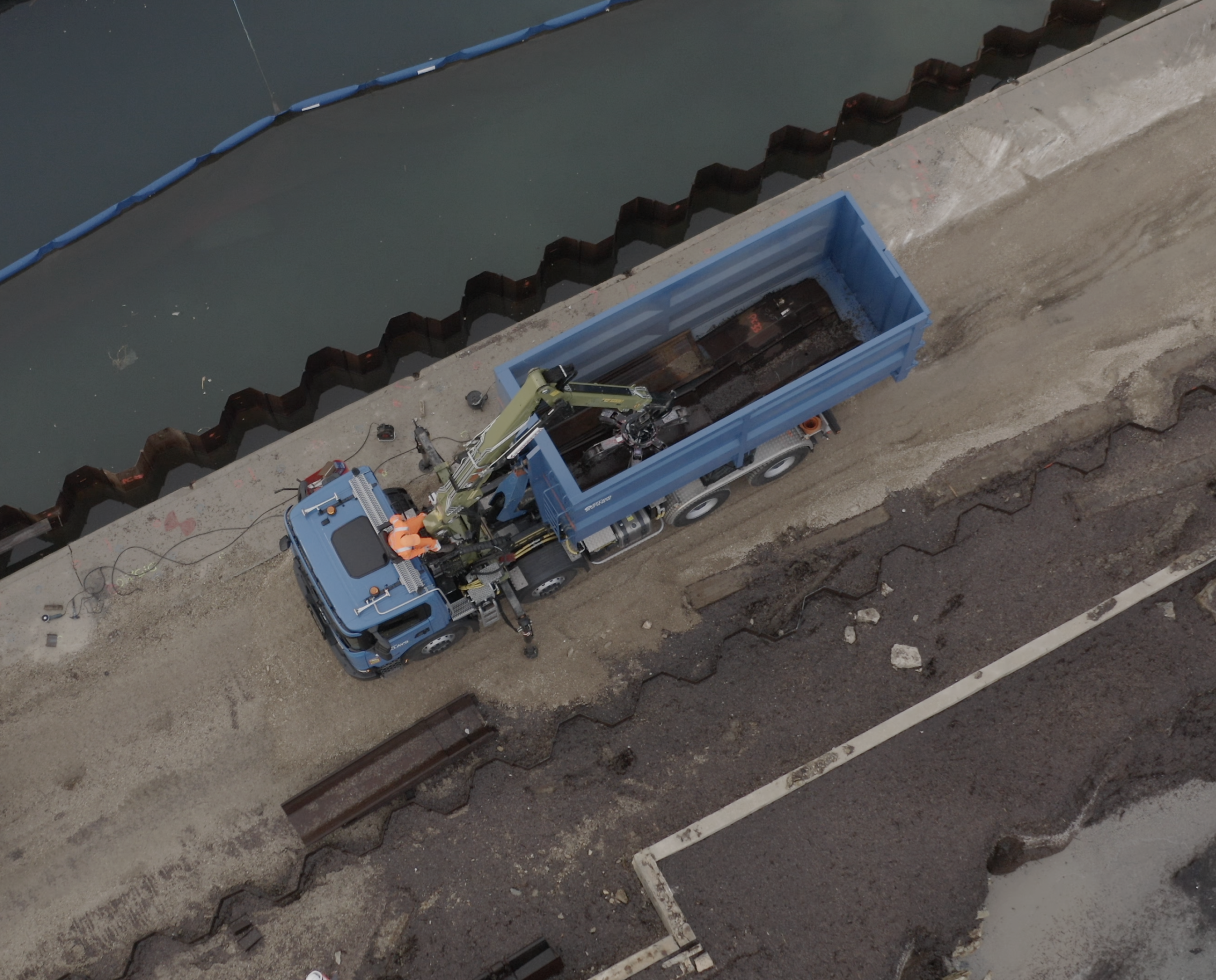
The sale of metal by weight can be very profitable in a professional waste disposal center, which guarantees the traceability of the waste. The SCLAVO ENVIRONNEMENT Group facilitates the recovery of metals and iron in the Var and Alpes-Maritimes regions, thanks to its 5 purchasing outlets and approved collection centers located close to business areas.